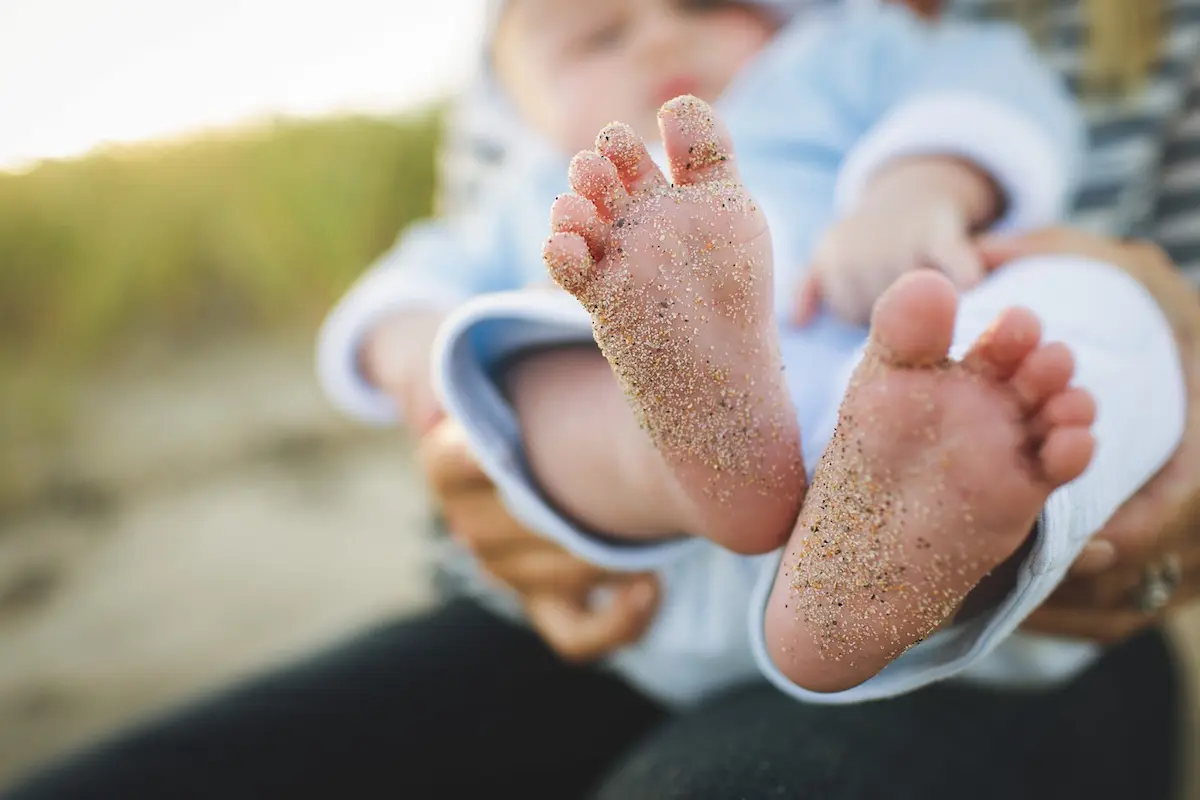
From the first minutes of life, a baby begins its grand journey into the world, and its main tools on this path are the senses. Touch, hearing, sight, smell and taste are the "windows" through which the brain receives information, learns, develops and builds an understanding of the environment. Sensory development is not just about pleasant sensations; it is a fundamental process that underlies brain development, motor skills, speech and the emotional sphere. Your task as parents is to create a rich, varied and safe sensory environment for the child that satisfies its natural curiosity and helps it develop harmoniously.
Touch: the language of love and discovery
The skin is the largest sensory organ. Through touch a child feels love, safety and receives the first knowledge about the properties of objects.
How to introduce textures?
- Diversity of fabrics: Run pieces of different fabrics over the child's hands and feet: smooth silk, soft fleece, rough burlap, cool cotton. Name the sensations: "soft", "smooth", "prickly".
- Tactile books and mats: Choose toys with various inserts: furry, rustling, ribbed.
- Natural materials: During walks let the child touch smooth tree bark, rough stone, soft grass or snow (always under supervision!).
- Water play: Bathing is a powerful sensory experience. Allow the child to splash, feel the water temperature, play with a sponge.
- Finger paints: Closer to a year, offer safe edible paints (for example, made from yogurt and food coloring). This is an incredible stimulation for the fingers.
Hearing: learning to listen and differentiate
Hearing in infants is already well developed, but the brain is still learning to interpret sounds, pick out meaningful ones and ignore background noise.
How to introduce sounds?
- Human speech — the best music: Talk to the child as much as possible. Vary intonation, timbre, volume. Read poems and lullabies. This is the basis for future speech development.
- Variety of music: Play classical music, children's songs, nature sounds. Observe how the child reacts to different rhythms and moods.
- "Noise boxes": Make simple rattles from plastic bottles, filling them with different grains (rice, buckwheat, beans). Each will sound different.
- Household sounds: Do not create absolute silence at home. Name the sounds the child hears: "That's the washing machine working", "And that's dad hammering".
Taste and smell: first gastronomic explorations
These two senses are closely linked. In the first six months the main object of exploration is mother's milk or formula. With the start of complementary feeding, a real sensory adventure begins.
How to introduce tastes and smells?
-
Complementary feeding stage (after 6 months): This is the "golden time" for sensory development.
- Don't fear variety: According to modern recommendations, there is no need to introduce foods in any strict sequence. Offer the child various vegetables, fruits, cereals. Details are in the article "Introducing complementary foods".
- Allow food exploration: Give the child the opportunity to touch food with hands, smear it, explore its texture. This is an important stage of familiarization.
- Name the flavors: "This is a sweet apple", "And this is a sour lemon".
- Introducing safe smells: Let the child sniff a cinnamon stick, orange peel, a sprig of dill, a flower.
Vision: from contrasts to details
A baby's vision develops gradually, and you can support this process at each stage.
- 2-4 months: Use high-contrast black-and-white pictures.
- 4-6 months: Introduce bright, pure colors (red, yellow, green, blue).
- 6-12 months: Look at books with detailed illustrations, observe objects outdoors (cars, dogs, birds).
About developmental games that stimulate all senses, we tell in the relevant section.
By creating a rich sensory environment for your child, you are not just entertaining them. You are actively building their brain, helping them discover the world in all its diversity and laying a solid foundation for future learning.