Observing how your baby's tiny hands transform from involuntarily clenched fists into skillful tools for exploring the world is one of the greatest joys of parenthood. This process, known as the development of fine motor skills, is an extremely important stage in cognitive development of the child. Fine motor skills are the ability to perform precise and coordinated movements with the hands and fingers. They form the foundation for countless future abilities: from self-feeding and dressing to writing and drawing. The development of these skills is closely linked to language development, as the brain areas responsible for motor skills and speech are located next to each other.
Birth – 3 months: Era of Reflexes
In the first months of life, a child's hand movements are predominantly reflexive.
- Grasp reflex: The main "hero" of this period. If you place your finger in a newborn's palm, they will grip it tightly. This is an automatic reaction, not a conscious action. Learn more about it in the article on innate reflexes.
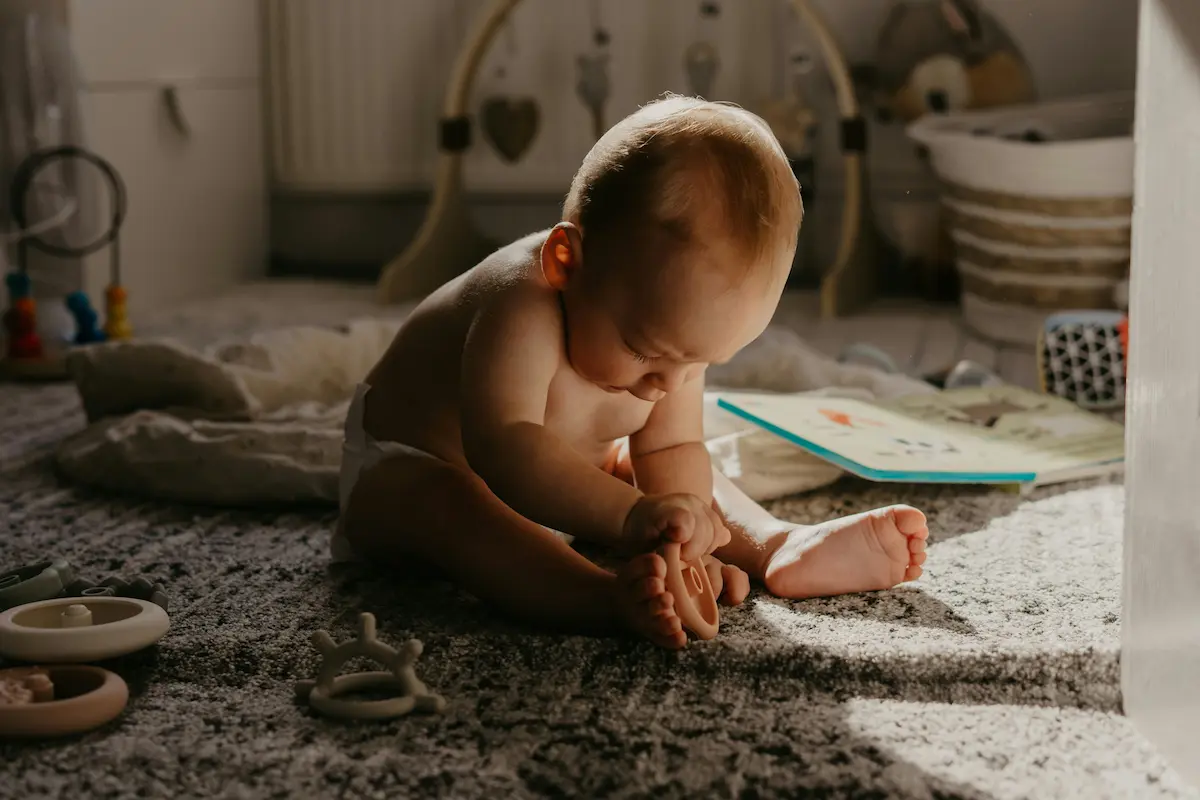
- Opening of the palms: Around 2–3 months, the fists gradually open. The child begins to "discover" their own hands, looks at them, and brings them to the mouth.
- First attempts: The baby starts waving their arms chaotically, sometimes accidentally brushing against toys hanging on the activity mat.
How to help: Place rattles with thin handles in the child's palm so they can practice holding them. Hang bright but safe toys above the crib or mat that they can try to reach for.
4–6 months: Era of Purposeful Grasping
This is a time of huge breakthrough. Reflexive movements give way to conscious and purposeful ones.
- Eye‑hand coordination: The brain learns to coordinate what the eyes see with what the hands do. The child sees a toy and deliberately reaches for it.
- "Palmar" grasp: The baby learns to grab objects with the whole palm, pressing them against themselves.
- Transferring from hand to hand: Around 6 months, an important skill emerges—the ability to move an object from one hand to the other. This indicates the development of connections between the brain hemispheres.
- Everything to the mouth: The mouth becomes the primary tool for exploring the texture, shape, and taste of objects.
How to help: Offer the child safe toys of various shapes, sizes, and textures that are easy to grasp. Safe teethers, soft balls, fabric books — an ideal choice.
7–9 months: Skilled Manipulator
The child becomes increasingly adept at handling objects. They not only hold them but also actively explore their properties.
- "Raking" grasp: The child learns to rake small objects toward themselves, using their fingers like a rake.
- Exploring properties: The baby happily bangs toys against each other or the floor, throws them to see how they fall. These are their first physics lessons.
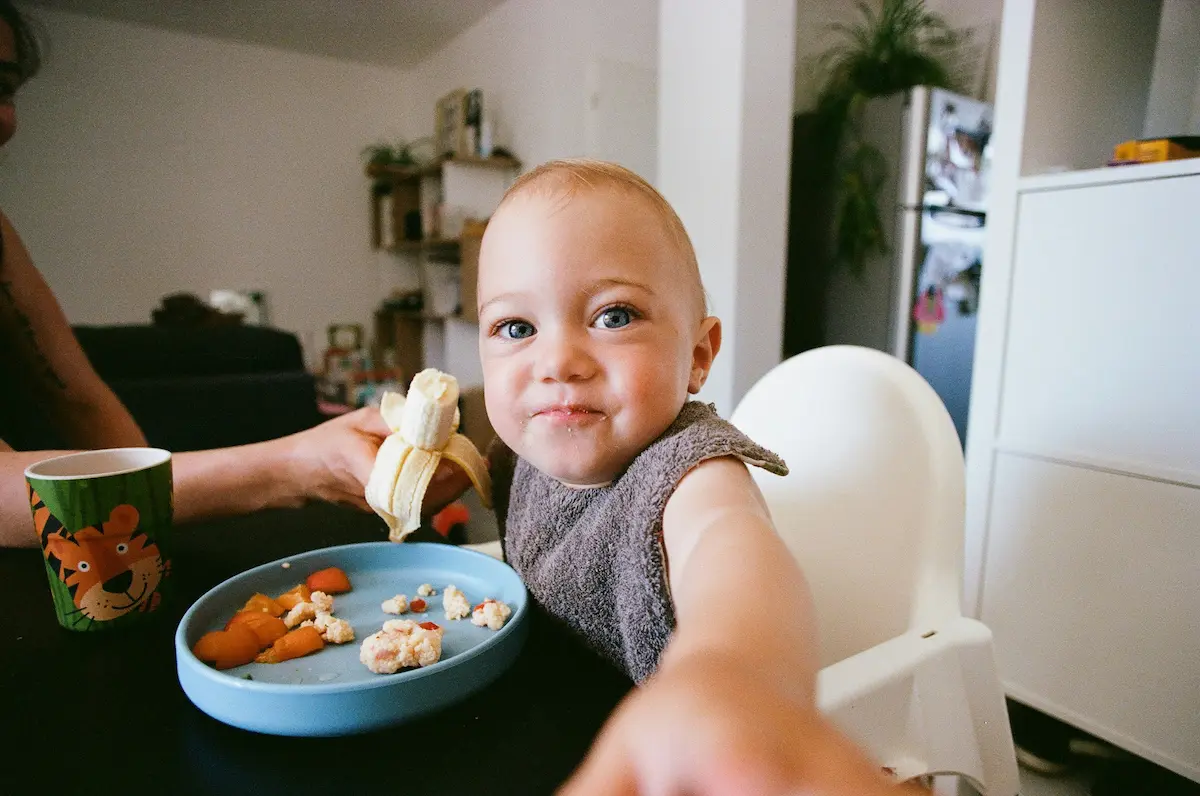
- Beginning of self‑feeding: This is a great time to practice motor skills. Offer the child safe pieces of soft food (banana, cooked carrot) that they can pick up with their hands.
How to help: Play simple developmental games. Build towers of blocks that the child can knock down. Offer toys with buttons and levers.
10–12 months: Triumph of the "pincer" grasp
This is the culmination of fine motor development in the first year.
- "Pincer" grasp: The child learns to pick up small objects not with the whole palm but with just two fingers — the thumb and index finger. This is an extremely complex and important skill, indicating a high level of brain development.
- Conscious actions: The baby can place objects into a box and retrieve them, turn the pages of a cardboard book, point to items with the index finger (an important branch of language development).
- First attempts at eating with a spoon: The child begins to show interest in a spoon and tries to eat independently, albeit clumsily.
How to help: Offer safe small items for practicing the "pincer" grasp (fruit pieces, large pasta). Play with sorters, pyramids, frame inserts.
Your role — create an environment
You don't need to buy every developmental toy on the market. The best way to stimulate fine motor skills is to allow the child to safely explore the surrounding world. Everyday household items (under supervision!), such as wooden spoons, plastic containers, caps, are often much more interesting than expensive toys. Create opportunities, encourage curiosity, and you will be amazed at how quickly your little explorer's skills improve.