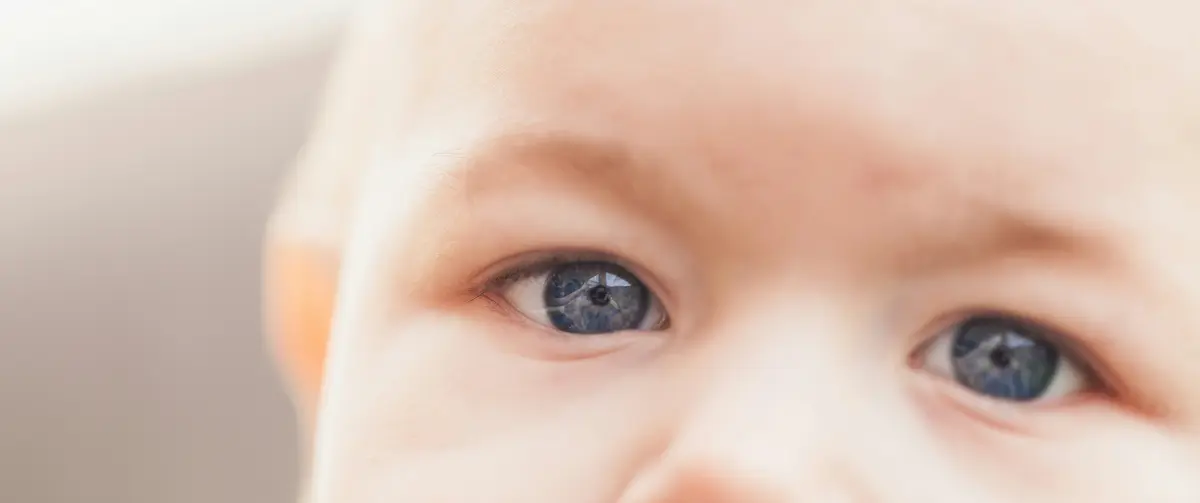
One of the most exciting moments for parents is when they first catch a meaningful gaze from their newborn baby. Vision is one of the key senses through which a child begins to explore the world, and its development in the first months of life is rapid and amazing. However, the world through a baby's eyes looks completely different from how we see it. The baby is born with physiological farsightedness and not yet fully formed neural connections between the eyes and the brain. Understanding the stages of visual development will help you interact with your child better, stimulate their development, and enjoy each new visual achievement.
Newborn's World (0-1 month): Foggy and High-Contrast
Immediately after birth, the world for the baby is blurry, black-and-white, and lacking depth. Their visual system is just beginning to work.
- Focus distance: A newborn sees best at a distance of **20-30 centimeters**. This is no coincidence — this is the distance that separates his eyes from the mother’s or father’s face during feeding. Anything farther away appears as blurry spots.
- Black-and-white cinema: Color vision is not yet developed. The child responds best to high-contrast images: black and white stripes, circles, simple geometric shapes.
- Human faces — top priority: The child's brain is "programmed" to recognize faces. Your face, with its clear contrast lines (eyes, nose, mouth), is the most interesting object to study.
- "Wandering" gaze: In the first weeks the baby's eyes may move uncoordinatedly or "cross". This is normal, as the eye muscles are still weak. This condition should resolve by 3-4 months.
How to stimulate development: While the baby is awake, hold your face at a distance of 20-30 cm and speak slowly to the child. Show simple black-and-white pictures. Read about other interaction methods in the article "First games with a newborn".
Second month: First colors and focusing
In the second month of life, the visual system makes a huge leap forward.
- Appearance of colors: The child begins to distinguish bright, saturated colors. Typically, the first are red and green. Pastel shades are not yet perceived.
- Tracking an object: The baby learns to focus the gaze with both eyes and smoothly track a toy that moves slowly in front of his face from side to side. This indicates the development of binocular vision.
- Visual contact and smile: The ability to maintain visual contact improves. And at the end of the second month you may receive the most desired reward — the first intentional, social smile in response to yours. This is an important milestone in emotional development.
How to stimulate development: Show the child bright toys (red, yellow, green colors), slowly move them in front of his eyes. Smile more often and "build dialogues" using facial expressions.
What is normal and what is cause for concern?
Visual development is an individual process. However, there are certain "red flags" that require consultation with a pediatrician or a pediatric ophthalmologist.
- If by 3-4 months the child's eyes continue to constantly "cross".
- If the child does not track an object with the gaze after 3 months.
- If you notice that the child's pupils are white instead of black, or any other abnormality.
- If the child constantly and intensely rubs the eyes, or they are very watery.
You can learn about other concerning symptoms in the article "When to call a doctor?".
General tips for eye health
- Provide soft lighting: Avoid direct, bright light aimed at the child's eyes.
- Change the position in the crib: Periodically change the position in which the baby sleeps (head to one side, then the other) so that they turn their head to different sides, stimulating both eyes.
- Regular care: Don't forget about daily eye hygiene, wiping them from the outer corner to the inner.
Watching your baby's gaze transform from unfocused to meaningful and loving is one of the greatest joys of parenthood. By creating a simple yet visually rich environment, you help the child step by step discover this wonderful world.